
The CBRN Gap: Why Most Hospitals Believe They're Ready When They're Not
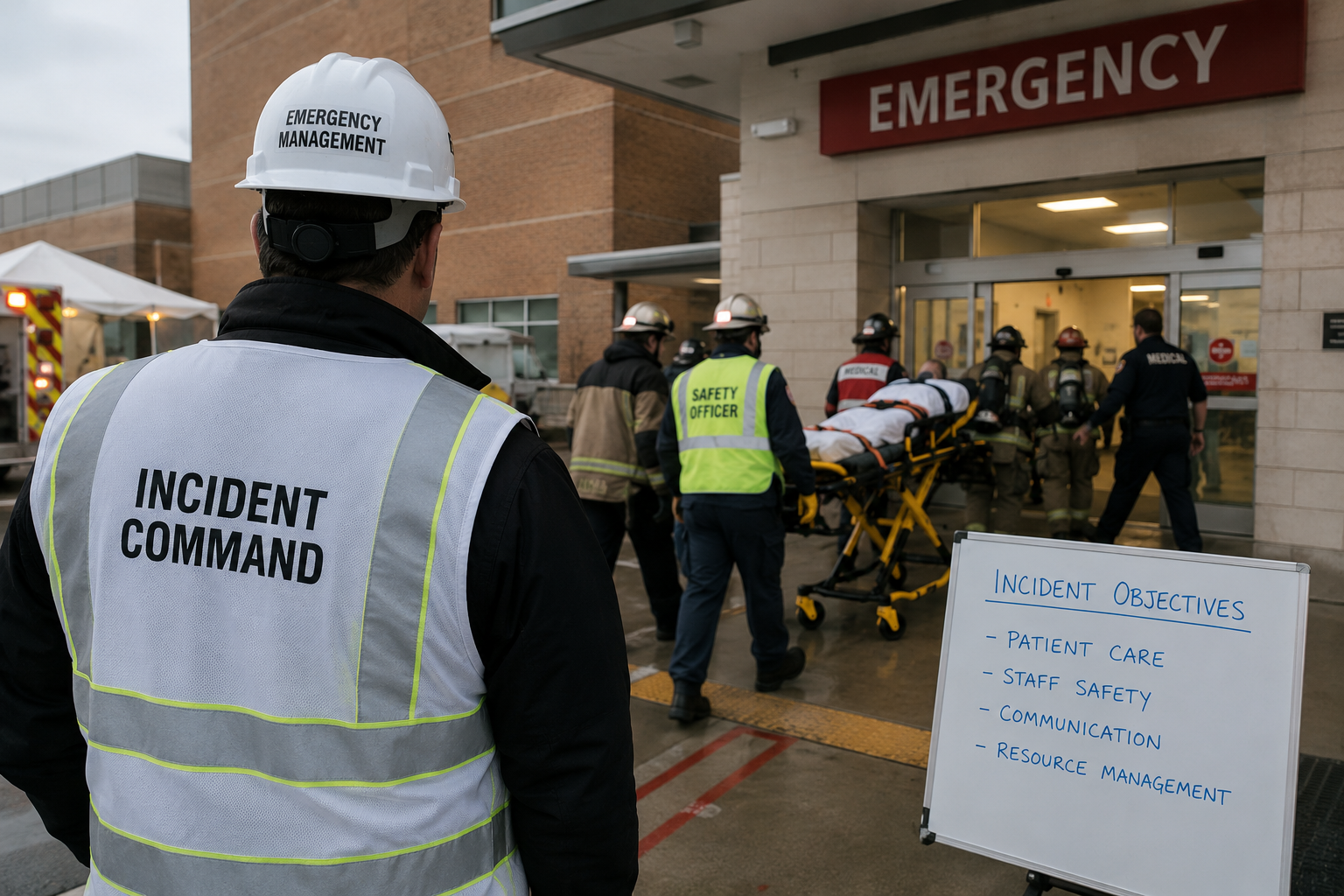
The Most Confident Hospitals Are Often the Least Prepared
CBRN incidents, chemical, biological, radiological, and nuclear events, are statistically rare. That rarity is the single biggest reason hospitals consistently overestimate their readiness.
A hospital that has never had a contaminated patient walk through its emergency department doors has never had to prove its CBRN program works. Plans look complete. Equipment is in place. Training records are current. The program appears strong on paper.
Then a patient arrives covered in an unknown product, and the gaps surface within minutes.
This is the CBRN gap. And in most hospitals, it is wider than leadership realizes.
Why CBRN Readiness Gets Quietly Neglected
CBRN preparedness is technically demanding, operationally disruptive, and expensive to maintain. It involves PPE that may require fit testing and recurring training, equipment that requires inspection and replacement, and skill sets that decay quickly when not exercised.
For programs already stretched across compliance work, exercises, and routine operations, CBRN tends to slip in priority. It becomes a category of plans that exist on the shelf, supported by occasional training, validated by the absence of incidents rather than by demonstrated capability.
The result is a category of risk that is high in consequence but low in attention.
The Five Most Common CBRN Gaps in Hospitals
Across hospital assessments, the same operational weaknesses appear consistently.
1. PPE Familiarity Decays Faster Than Compliance Tracking Suggests
Fit testing, if required, satisfies OSHA. It does not produce capability. Staff who don PPE once per year cannot don it competently under operational stress. The first time they perform under pressure should not be the first time they have done it in twelve months.
2. Decon Teams Are Built on a Small Number of Trained Staff
Most hospitals rely on a relatively small cadre of decon-trained personnel. During off-hours, weekends, or simultaneous operational demands, that cadre may not be available. The plan assumes availability that the staffing model cannot guarantee.
3. The Walk-In Contaminated Patient Is Rarely Planned For
Hospital CBRN planning frequently assumes notification; a hazmat call, a coordinated transport, an inbound warning. Real incidents often involve self-presenting patients who walk into the emergency department before staff recognize the contamination. The window between arrival and recognition is where most exposure events occur.
4. Decon Infrastructure Is Not Stress-Tested
Decon tents, water management, runoff containment, lighting, and staffing flow are often configured for ideal weather and ideal staffing. They are rarely tested in cold, rain, wind, darkness, or with limited personnel, even though those are the conditions under which incidents are most likely to occur.
5. The Hospital Locks Down Too Late or Not at All
Recognition delay almost always produces facility contamination. By the time leadership decides to restrict access, the patient has often moved through multiple areas. Programs that have never drilled a rapid lockdown decision rarely make that decision quickly when it matters.
What OSHA, NFPA, TJC, and CMS Actually Expect
CBRN readiness is not optional. It is shaped by overlapping standards:
OSHA 1910.120 requires training for hazmat response personnel, including hospital decon teams
OSHA Best Practices for Hospital-Based First Receivers provides the operational framework hospitals are evaluated against
NFPA 470 establishes professional competencies for hazmat response
The Joint Commission EM standards require hospitals to demonstrate capability across the full hazard spectrum
CMS Conditions of Participation require an all-hazards approach, which explicitly includes CBRN events
Compliance with these standards is the floor. It is not the ceiling. A hospital can be fully compliant with documentation requirements and still be operationally unprepared for an actual CBRN event.
The Question That Reveals Real CBRN Readiness
The most useful diagnostic is a single scenario:
"A patient walks into our emergency department, agitated, covered in an unknown liquid, with no notification, on a Saturday at 11 PM. From the moment they cross the threshold, how long until we recognize the threat, isolate the patient, protect staff, lock down the facility, stand up decon, and notify the appropriate external partners?"
A confident answer is not a sign of readiness. A specific, evidence-backed answer with measured times from prior drills is.
About D2 Emergency Management Consulting
D2EMC was built on three decades of CBRN and hazmat operational command across military, state, and healthcare environments. We help hospitals close CBRN gaps before they become incidents.
We help organizations:
Assess CBRN readiness against OSHA, NFPA, TJC, and CMS expectations
Identify the operational gaps your current program is not surfacing
Build CBRN training that produces capability, not just compliance
Design realistic decon and lockdown drills
Prepare leadership to make CBRN decisions under time pressure
Because the contaminated patient who walks in unannounced does not care what is in the plan.
REQUEST A CBRN READINESS GAP LETTER
