
The Tabletop Illusion: Why Most Hospital Exercises Don't Predict Real Performance
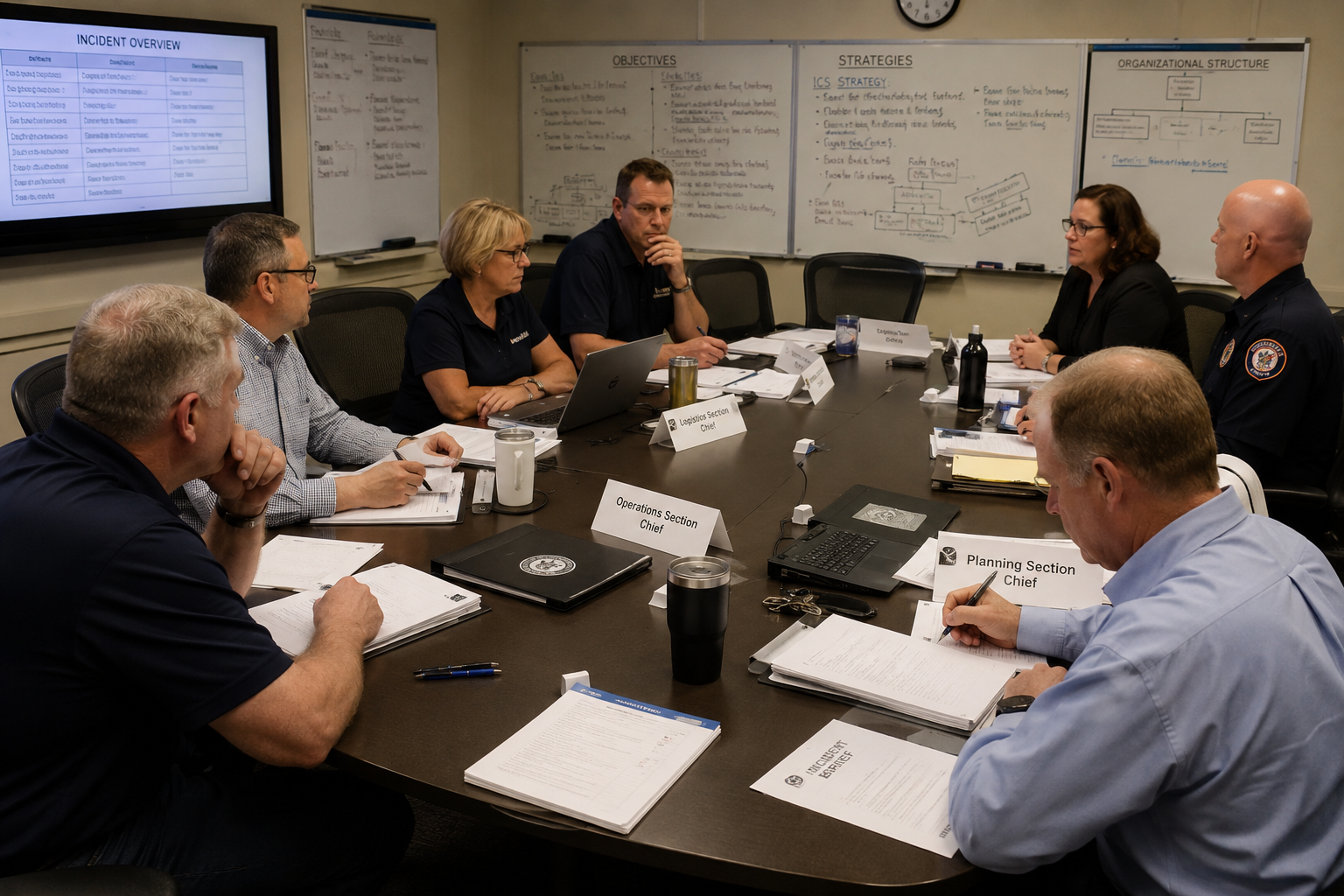
The Most Common Exercise in Healthcare Is Also the Weakest
Most hospital emergency management programs rely heavily on tabletop exercises. They are inexpensive, simple to schedule, and easy to document. They satisfy regulatory expectations from The Joint Commission, CMS, and most accrediting bodies.
They also produce some of the least meaningful preparedness data in healthcare.
This is not because tabletops have no value. They do. But many programs use them as the primary, and sometimes only, method of evaluating readiness. That decision creates a measurable gap between what an organization believes it can do and what it can actually do under operational pressure.
What a Tabletop Actually Measures
A tabletop exercise evaluates discussion. Participants describe what they would do, who they would call, and how they would coordinate.
They do not perform tasks. They do not move resources. They do not don PPE. They do not stand up a decon line. They do not push patients through a triage corridor. They do not make decisions under time pressure.
In other words, a tabletop measures whether people understand the plan.
It does not measure whether the plan works.
What a Tabletop Does Not Reveal
When a tabletop is the dominant exercise method, several critical performance areas remain untested:
Whether equipment is accessible, functional, and within calibration
Whether staff can locate and don PPE within operationally acceptable timeframes
Whether communication systems perform under simultaneous load
Whether decision-makers can be reached and respond within the time the scenario requires
Whether physical patient movement, decon flow, and triage corridors function as designed
Whether the plan survives contact with reality
Each of these is a known failure point in real incidents. None of them are surfaced in a conference room.
Why Programs Default to Tabletops
There are practical reasons hospitals lean on tabletops:
They require little operational disruption
They are inexpensive
They produce documentation auditors recognize
They are easy to schedule across busy clinical departments
They feel productive
The problem is not that tabletops exist. The problem is that they are used as a substitute for evaluation methods that would actually reveal performance gaps.
The Exercise Hierarchy Most Programs Ignore
HSEEP defines a clear progression of exercise types, each producing different levels of insight:
Seminars and workshops introduce concepts.
Tabletops evaluate understanding.
Drills evaluate single functions under realistic conditions.
Functional exercises evaluate coordination across functions in real time.
Full-scale exercises evaluate end-to-end response under simulated operational stress.
Many hospital programs cycle indefinitely through the first two tiers. They rarely progress to drills, functional exercises, or full-scale exercises, which are the only methods that produce reliable readiness data.
A program that has run ten tabletops in five years has not built ten years of readiness. It has built familiarity with one method of discussing problems.
What Real Exercise Readiness Looks Like
Programs that build genuine response capability typically share several characteristics:
They run frequent, short, function-specific drills rather than infrequent large exercises
They include unannounced or partially announced components
They incorporate time pressure, incomplete information, and resource constraints
They test specific decisions — not just procedures
They evaluate performance against measurable benchmarks, not narrative description
They progress through the exercise hierarchy intentionally rather than defaulting to the lowest tier
Exercises designed this way reveal gaps. Exercises designed for documentation conceal them.
The Survey Risk No One Talks About
There is a quiet liability inside exercise programs that rely too heavily on tabletops. The Joint Commission has signaled increasing interest in actual performance evidence; not exercise logs, but after-action data showing identified gaps and demonstrated improvement.
A program that consistently produces tabletop after-actions with no measurable findings, no corrective actions, and no follow-up evidence does not look strong on survey. It looks shallow.
Surveyors increasingly recognize the difference.
The Question to Ask Before the Next Exercise
Before scheduling another exercise, leadership should ask one question:
"If this exercise produces no findings, will we accept that as a sign of strength or as a sign that the exercise was not designed to find anything?"
A well-designed exercise generates findings. A weak exercise generates a clean report.
Organizations that mistake the second for the first are operating on confidence without capability.
About D2 Emergency Management Consulting
D2EMC works with hospitals, healthcare coalitions, and public safety partners to build exercise programs that actually predict real performance.
We help organizations:
Evaluate existing exercise design against HSEEP and TJC expectations
Build progressive exercise programs that move beyond tabletops
Design drills and functional exercises that surface real operational gaps
Strengthen AAR quality and improvement plan execution
Train exercise designers and evaluators inside your organization
Because passing an exercise is not the same as being able to respond to one.
BOOK A CONSULTATION NOW!
